

The rapid rise of electric vehicles (EVs) is not only reshaping the automotive market in terms of products and consumer behavior but also triggering profound transformations in repair and maintenance services. From technical structures and labor requirements to aftersales business models, the traditional repair ecosystem is facing a fundamental transition.
Unlike internal combustion engine (ICE) vehicles, electric vehicles have a simpler mechanical structure but are more technologically complex. Electric motors, high-voltage batteries, Battery Management Systems (BMS), and control software replace familiar components such as traditional gearboxes, fuel systems, or engines with numerous moving parts.
This leads to a decrease in mechanical repair needs, while items related to electrical/electronics, software, and digital diagnostics become the focal point. Many EV faults cannot be fixed using manual methods as before but must be addressed through specialized diagnostic equipment and software updates.
From “Repair” to “Data-Driven Maintenance”
The popularity of EVs is fundamentally altering the operating philosophy of automotive aftersales services. While ICE vehicle repairs are often reactive—fixing the car when it breaks—in the EV era, operating data becomes the heart of maintenance activities.
Electric vehicles are equipped with a dense network of sensors and continuous connectivity, allowing for real-time monitoring of battery status, electric motors, cooling systems, and electronic modules. This information is not only stored in the vehicle but also transmitted to the manufacturer’s system or service centers. As a result, abnormalities can be detected early, before serious failures occur.
The shift to data-driven maintenance brings significant changes to repair workflows. Garages no longer rely solely on experience and manual inspections; they must read data, analyze system warnings, and handle errors according to standardized protocols. This reduces “vehicle-down” time but also increases dependence on proprietary technology, software, and genuine diagnostic systems.
Technical Labor Faces a Comprehensive Retraining Requirement
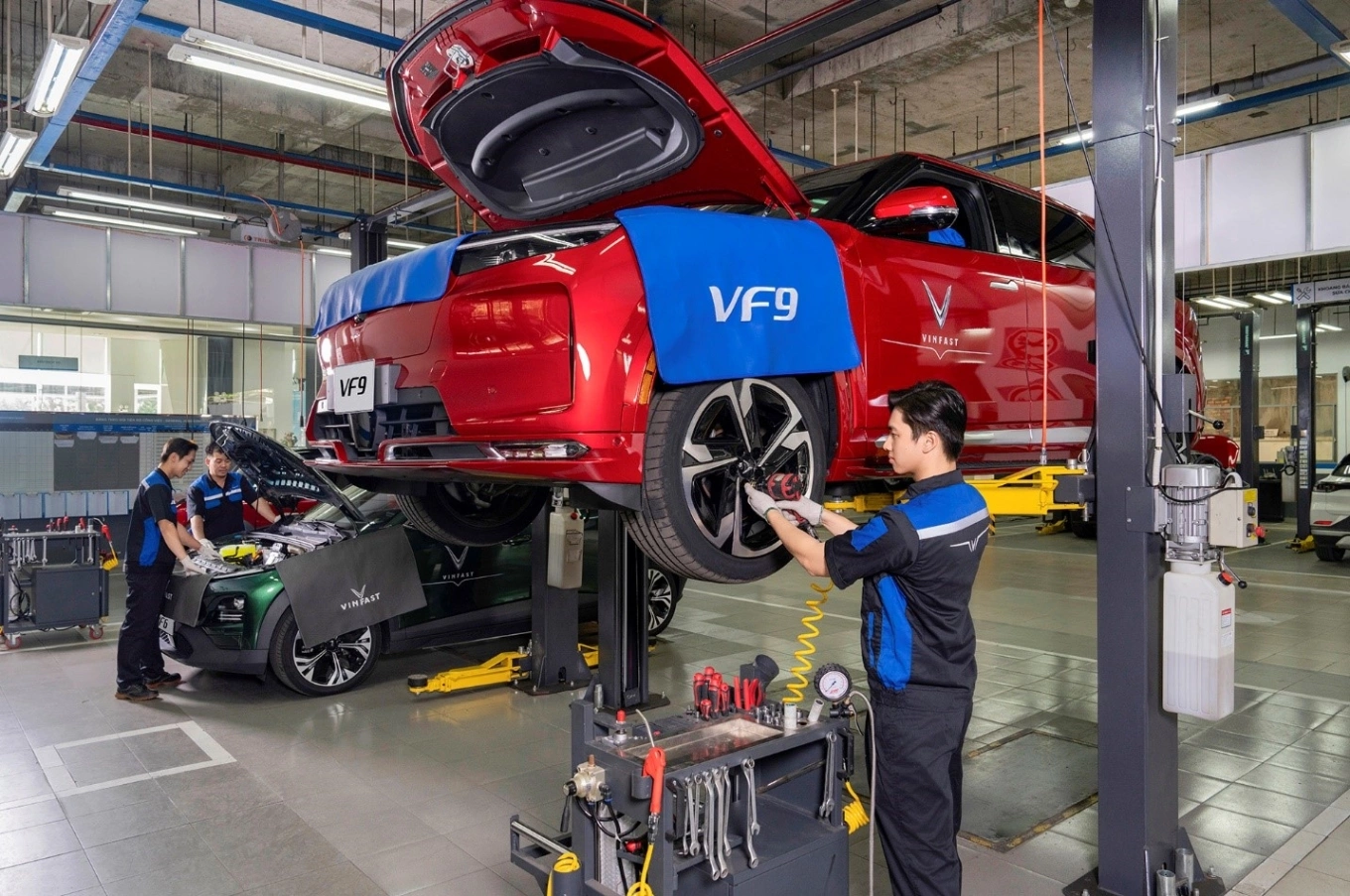
Technological shifts make human capability the key factor in EV repair services. EV technicians are no longer just mechanics; they are evolving into electrical/electronic and software systems technicians.
Working with high-voltage batteries requires specialized knowledge and strict safety protocols. Even a minor error in handling can pose severe risks to both the technician and the vehicle. This forces service centers to invest systematically in training, certification, and upskilling their workforce.
In reality, many traditional garages are struggling with this transition, as their current staff possess years of experience with gasoline engines but lack a foundation in electrical/electronics. If this gap is not addressed soon, garages may lose their competitive edge as EV numbers continue to climb.
Independent Garages Face Technology and Cost Barriers
For independent repair garage systems, EVs pose a much tougher challenge than they do for authorized service centers. To repair EVs, a garage needs to invest in specialized diagnostic equipment, insulated tools, safety-compliant workspaces, and trained personnel.
Furthermore, many EV issues are directly linked to proprietary software or control systems that can only be handled through authorized manufacturer systems. This narrows the scope of work for independent garages, particularly in complex areas like battery packs, energy management systems, or software updates.
This situation leads to a risk of clear market polarization, where authorized centers or specialized EV garages hold the advantage, while traditional garages that are slow to adapt may see their market share shrink in the medium and long term.
Aftersales Revenue Models Forced to Adapt
Electric vehicles change not only the technical side of repairs but also the revenue models of the aftersales industry. For ICE vehicles, a large portion of revenue comes from periodic maintenance and the replacement of consumable parts. However, EVs have fewer mechanical wear-and-tear parts, leading to a significant reduction in traditional repair and maintenance frequency.
This forces repair entities to seek new revenue streams, focusing more on services such as battery health checks, system diagnostics, software updates, extended warranties, or vehicle lifecycle maintenance packages. Service value is no longer measured by the number of repairs, but by the quality of diagnostics and technological problem-solving capabilities.
This change also makes customer data, operating history, and maintenance records more critical than ever in building long-term relationships between garages and car owners.
Repositioning Opportunity for Vietnam’s Auto Repair Industry
Despite the challenges, the rise of electric vehicles offers a repositioning opportunity for the auto repair industry in Vietnam. Entities that invest early in training, technology, and safety standards can become pioneers in the new aftersales market.
Beyond traditional repairs, fields such as battery quality assessment, battery recycling, battery second-life applications for energy storage, or remote diagnostic services promise to become high-value-added segments in the near future.
In the long run, as the EV adoption rate grows sufficiently large, the auto repair industry will not disappear, but its nature will undoubtedly undergo a deep transformation. Mechanical repair will gradually give way to system, data, and software repair—an inevitable step in the electrification journey of the automotive industry.